Introduction
What a cohort, a classroom, and an afternoon at a prep school taught us about putting learners and teachers back at the centre of AI in education.
When co-design is valuable and evidence based, I have seen meaningful moments in a recent Adaptemy classroom pilot I co-designed and evaluated, when the technology fades and learning becomes visible. A student turns to a peer and says, unprompted, “Wait, I think I can explain this…” before elucidating an equation in Physics, step by step to their fellow student. When we co-designed with the teacher that dialogue is not only welcomed, but encouraged, she stepped back from the board and realised a change in her classroom. After an initial, deliberate teaching session of the subject matter, mediated by the platform’s affordances, the students’ conversation revolved around understanding, supporting and figuring out how they were learning. That moment revealed a productive struggle mediated by the platform and the co-designed learning environment.
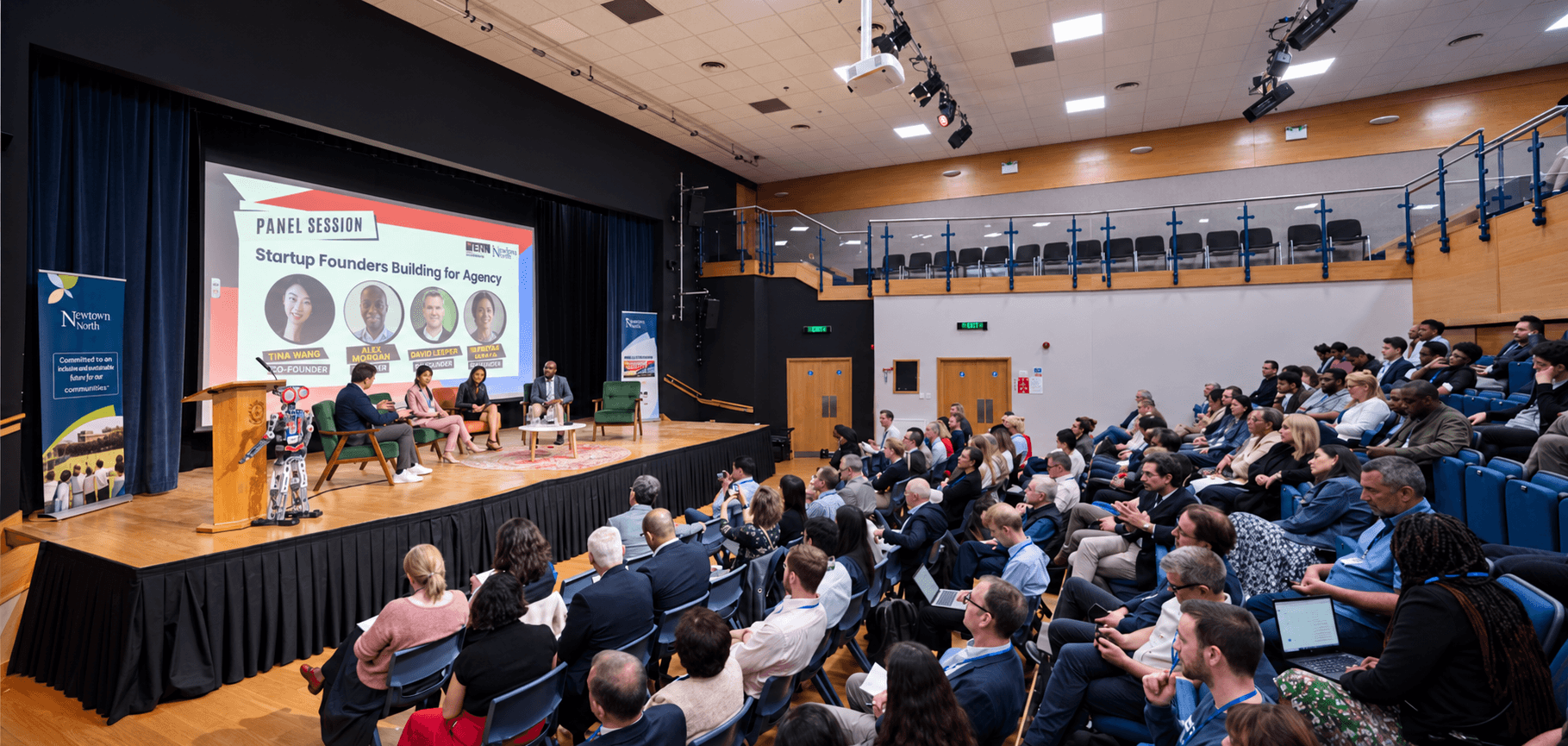
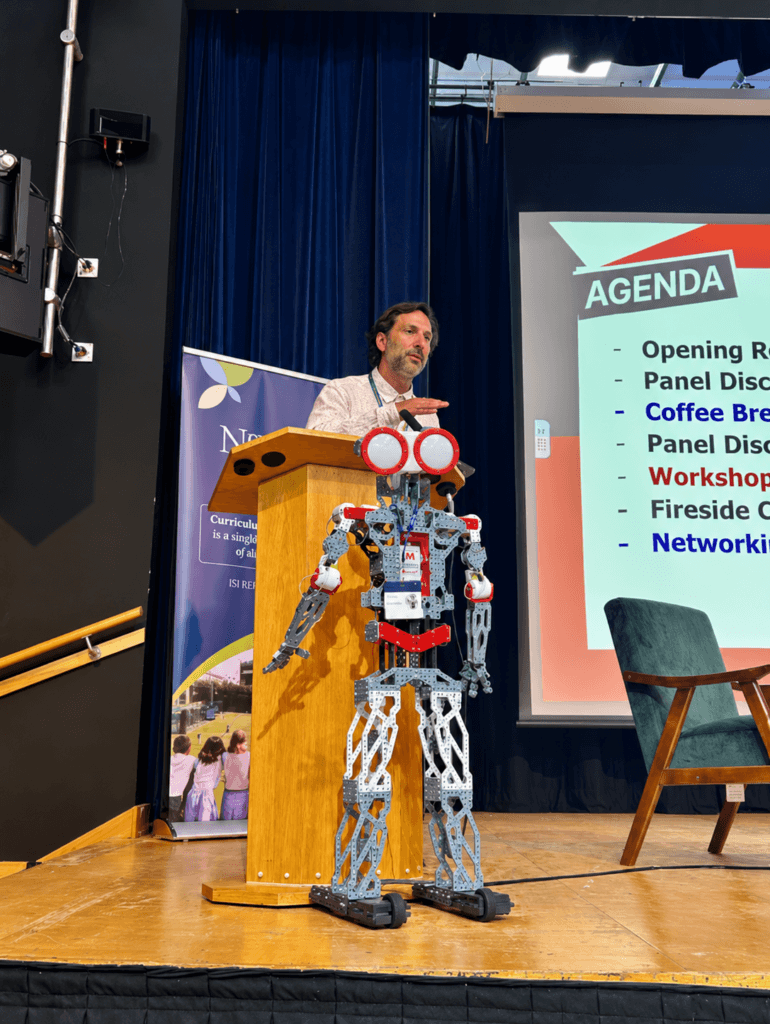
This is a reflection on how we got to that moment. It draws on work through the UCL EdTech Labs AI Cohort I led Adaptemy through an evidence-based course part, of which I co-designed in its nascent stages, where we devised, in collaboration with peers and instructors, an appropriate research framework, based on Adaptemy’s product, pedagogical approach and experience with K12 learners. From this applied in a cross-curricular pilot with international learners and teachers with subsequent evaluation as well as a K12 wellbeing platform in Ireland. As well as a conversation at Newton Prep School during the EdTech Mini Summit at EdTech Week 2026 where founders, investors, teachers and researchers gave up an afternoon to grapple with one hard question: What does it actually mean to put the learner at the centre?
Starting with a hypothesis, not a product
The UCL EdTech Labs cohort, formerly the Educate programme, which I co-designed in its nascent stages with the Educate team at UCL Knowledge Lab, where I was a research mentor of EdTech companies, we worked hard as a team to support EdTech start ups to embed evidence-based research into product development along with other research and business mentors such as Houtan Froushan where we were asking an uncomfortable questions:
- Does your EdTech product’s theory of learning hold up?
- What needs to change to support learners better?
- What’s the role of teachers/ trainers and how can we support them better?
- How can we design for learning in changing and complex education environments?
Working through the recent UCL Labs AIED cohort with Adaptemy, we tested a hypothesis rooted in the learning sciences: that learners experiencing productive struggle (Schonberg, et al. 2026) is not something to be eradicated from the learning process, but the process itself. If learners are given, through learning, a place to struggle, not to the point of frustration, but enough so that self-efficacy and critical thinking which are part of metacognition can be activated, there can be space for more active rather than passive learning. Kapur’s (2008) productive failure research shows learners who struggle before instruction outperform those who receive instruction first, even when the struggle produces no correct answers. The research question I devised with Adaptemy, to be explored across several of their pilots, was how to design learning experiences in that ‘Goldilocks Zone’ where something feels within learners’ reach, but is still challenging.
What the pilots revealed
Across Adaptemy classroom pilots in a recent project, spanning History and Physics, the dashboards became a starting point where we could ask questions. A student who had disengaged returned to the platform of her own accord, chose a different learning mode, from explore to practice, and began explaining the concept she was learning to a peer. That sequence: disengagement, self-directed return, increased challenge, peer teaching, is not a story about an algorithm. It is a story about a learner and teacher agency.
We documented three regulation pathways. In the first, students moved from self-regulation into productive struggle, choosing to push into difficulty. In the second, teacher-mediated co-regulation opened a dialogic space where thinking became visible and had a ripple effect of the learners feeling comfortable to be more in dialogue and less in competition with each other. In the third, peer co-regulation led to co-productive struggle: students working through difficulty together by sharing the cognitive load, not dividing it. Crucially, none of these pathways appeared when the platform was used as a bolt-on to a traditional lesson. They emerged only after we designed a Teacher Pedagogical Guide that leveraged the socialisation of the classroom. The intervention was not the technology. It was the learning design wrapped around it.
The platform did not create the learning. It created conditions in which learning could become visible, to the students, to their peers, and to the teacher.
EdTech Mini Summit and Newton Prep
The EdTech Labs Mini Summit during EdTech Week brought a deliberately mixed group to Newton Prep School: founders building AI products, investors evaluating them, teachers using them, researchers studying them. The format was not a pitch session. It was an afternoon built around a shared problehoutm: Are we designing AI that makes teachers better, or quietly making them feel redundant? What seemed to emerge from both the pilots and projects that we have been undertaking was a conversation about augmentation, not as a marketing term, but as a genuine design framework:
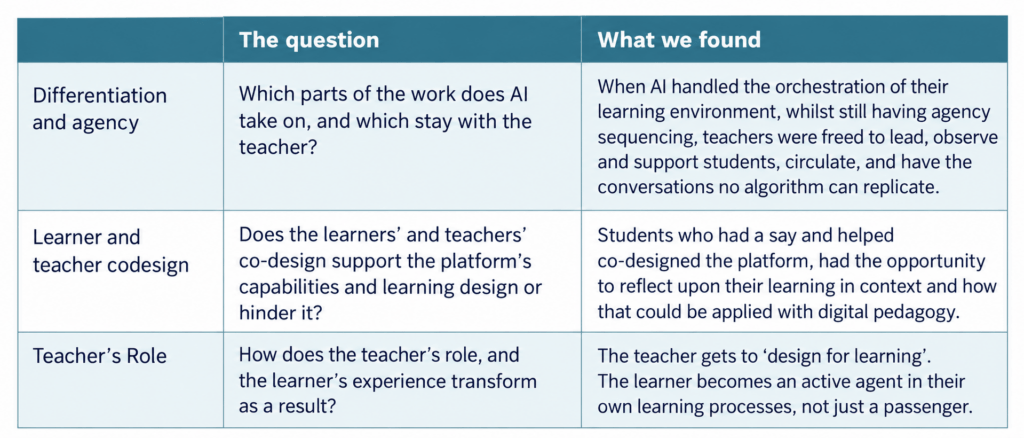
The idea of productive struggle emerged in discussions in the conference as well, in the form of friction. To remove the friction and you remove the learning. An investor asked whether “augmentation” is just a polite word for automation in stages. The room did not resolve these tensions, it’s an ongoing process and dialogue across projects within this field.
Process as product, and where this leaves us
 The strongest theme across the pilots, the UCL EdTech Labs AIED cohort, and what seemed to be repeated again and again through panel discussions at the EdTech Mini Summit at Newton Prep was this: Learners’ process is not a step on the way to product. The learners’ processes are the way to build a meaningful product that puts the learner at the center. This means understanding where and how the learning design can provide space for learners’ productive struggle, when not too much or too little; as well as when it enables deeper learning. When a student articulates her thinking to a peer, this ‘thinking aloud’ is not preparation for learning, it is learning. When a teacher redesigns or co-designs a lesson with the learners’ needs for learning in mind, together with the knowledge of the platform’s affordances, that redesign is professional development, with the learner at the center. The students in the pilot who applied recovery strategies when they were stuck, were not demonstrating platform effectiveness. They were demonstrating that the learning design had created enough safety, and yet enough challenge for their struggle to feel productive rather than punishing.
If there is one thing a teacher, a policymaker, a founder, an investor, could take from this mini summit and the lessons learnt in some of the pilots we have been working on, the question is not whether AI can personalise learning. It can. The question is whether, in personalising it, we are building learners’ capacity to regulate their own thinking, and deepening their own conceptual understanding, or removing the need for them to try or to even think. One of the most exciting moments was to hear a student say, trying a difficult question with the dialogic AI on the platform, “I had to think about it then”! Deeper thinking is not always a given, but when it genuinely occurs through evidence-based learning design, it can be a delight and an encouragement for both the learners and the learning designers when it happens. I think often we may be doing learners a great dis-service by making learning design too frictionless or challenging, but of course too much friction and clunky learning design can hinder their learning. So finding out, in co-design with students and teachers, what can support and what can hinder learning is the real challenge we face in our pervasive AI learning environments. When answering a question, productive struggle is not a problem to be solved. It is a condition to be designed for. When integrating this technology into classrooms, teachers are not an obstacle to scale. If we co-design for learning, a good teacher can be the reason meaningful learning can take place.
References
Schonberg, C., Hargis Becker, M., An, X. et al. (2026) Spaced Learning Supports Productive Struggle in an Online Learning Platform. Tech Know Learn 31, 365–381 https://doi.org/10.1007/s10758-025-09914-x
Kapur, M. (2008). Productive Failure. Cognition and Instruction, 26(3), 379–424. https://doi.org/10.1080/07370000802212669
Hiebert, J., & Grouws, D. A. (2007). The effects of classroom mathematics teaching on students’ learning. In F. K. Lester Jr. (Ed.), Second handbook of research on mathematics teaching and learning (pp. 371–404). Information Age Publishing
Warshauer, H. K. (2015). Productive struggle in middle school mathematics classrooms. Journal of Mathematics Teacher Education, 18(4), 375–400. https://doi.org/10.1007/s10857-014-9286-3
White, J., & Stevens, K. (2024). “Chapter 10: Ethics of digital education”. In The Elgar Companion to Applied AI Ethics. Cheltenham, UK: Edward Elgar Publishing. https://doi.org/10.4337/9781803928241.00019
White, J., du Boulay, B. (2024). Supporting Learners’ Metacognition and Meta-Affect. In: Santoianni, F., Giannini, G., Ciasullo, A. (eds) Mind, Body, and Digital Brains. Integrated Science, vol 20. Springer, Cham. https://doi.org/10.1007/978-3-031-58363-6_5
About the author
Jessica Kennedy White: Learning Sciences Researcher and Learning Design Architect who has been collaborating with Adaptemy on evidence-informed learning design and evaluation of pilots. An interdisciplinary doctoral researcher at the University of Sussex (Education & HCI), her published work explores how evidence based learning design can support learners’ self-regulation and metacognition (White and de Boulay, 2024); as well as the ethics of AI in education (White and Stevens, 2024). She co-created UCL’s Educate programme, which is now UCL EdTech Labs where she took Adaptemy through ‘25 AIED online Cohort. She founded an education charity in Austria, often EU funded, and has been a learning scientist & designer in a range of digital learning / education companies as well as a former teacher in international contexts where she designed blended learner centered curricula.